You’ve scrolled through every ‘top 100 baby names’ list on the internet. They all feel the same. Too popular, too plain, or too ‘try-hard unique.’ What you actually want is a name that feels personal one that carries meaning, sounds beautiful, and won’t have three other kids in the class sharing it.
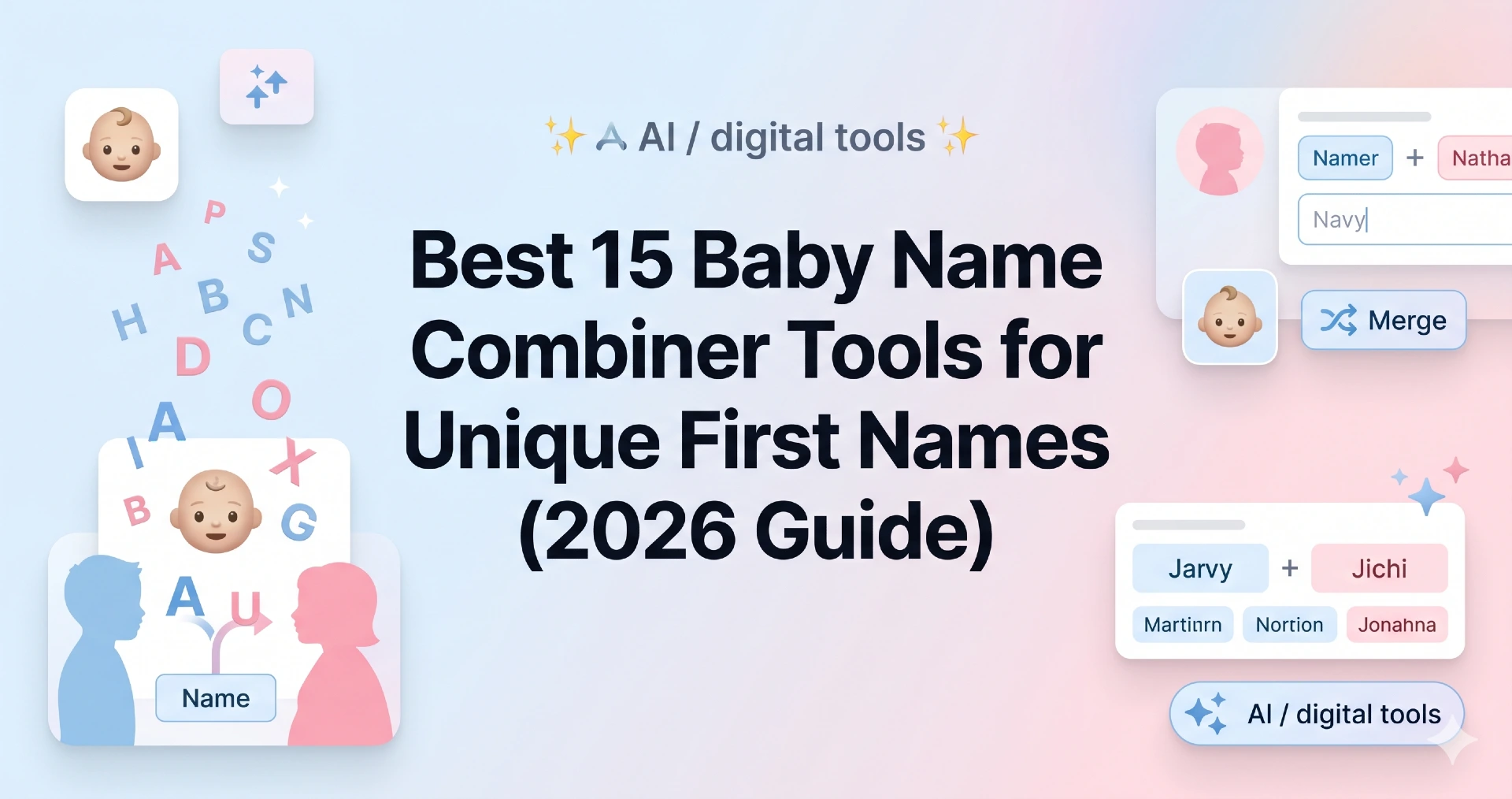
That’s exactly what baby name combiner tools were built for. These tools blend names usually the parents’ names, family names, or meaningful words into fresh, original combinations. Some are simple text mashers. Others use phonetic algorithms, cultural databases, and even AI to generate names that actually sound like names rather than random letter salads.
This guide covers the 15 best options available right now, what makes each one worth your time, and how to use them strategically to land on something genuinely special.
What Is a Baby Name Combiner Tool, Exactly?
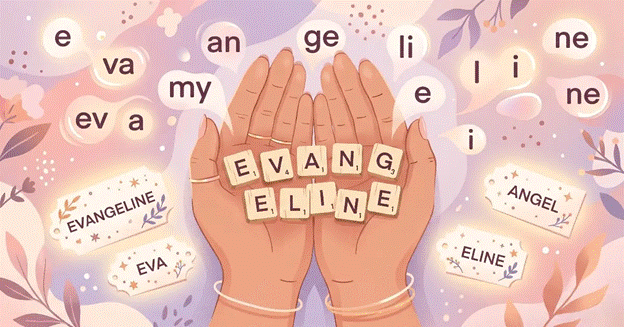
A baby name combiner takes two or more input names and generates hybrid outputs by merging syllables, sounds, or letter patterns. The technology ranges from basic string manipulation to sophisticated phonetic models that assess how well sounds blend based on linguistics.
The best tools in 2026 go further cross-referencing meaning databases, flagging names that accidentally spell something unfortunate, and even checking name popularity so you know if your ‘unique’ pick is secretly trending.
The 15 Best Baby Name Combiner Tools
1. Nameberry Name Combiner
Nameberry’s tool is backed by one of the largest baby name databases on the internet. It combines phonetics with meaning matching so if both parent names have roots in nature, the output reflects that. Clean UI, no fluff.
2. BabyCenter Name Blender
BabyCenter has built serious trust with parents for decades. Their blender generates multiple variations ranked by ‘namability’ a score based on syllable flow and how the name sounds spoken aloud.
3. SpinXO Baby Name Generator
SpinXO lets you feed in syllables, themes, and even hobbies alongside names. It’s particularly strong for parents who want a name inspired by meaning rather than pure sound combination.
4. Kpopmap Name Combiner
Originally built for fan culture, this tool has evolved into a surprisingly capable name blender. Best for parents who want names with soft consonants and melodic vowel patterns.
5. Behind the Name Combiner
This tool is a linguist’s dream. It pulls from etymology databases so every generated name comes with a breakdown of its meaning, origin, and phonetic structure. If meaning matters to you, start here.
6. Rum and Monkey Name Generator
Old-school but still effective. Simple blending logic with fast outputs. Good for generating a large batch of options quickly when you’re in the brainstorm phase.
7. Fantasy Name Generators Real Names Edition
Don’t let the ‘fantasy’ tag mislead you. Their real-name blending tool is robust, offering cultural filters (Celtic, Latin, Arabic, East Asian roots) so the output fits your family’s heritage.
8. AI Baby Name Generator by ChatBaby
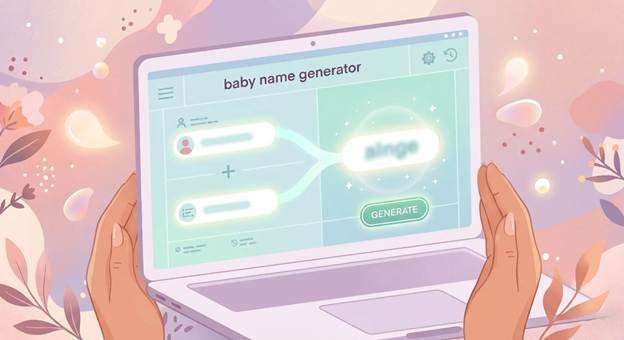
Uses a language model fine-tuned on naming conventions. Input both parents’ names plus 3 keywords (e.g., ‘strong,’ ‘gentle,’ ‘ocean’) and it returns 10 phonetically sound combinations with meanings.
9. NameMesh
Built primarily for domain naming but extensively used by parents. Its ‘blend’ mode produces names that are short, pronounceable, and memorable exactly what a first name needs to be.
10. Nymbler
Nymbler’s recommendation engine lets you rate names as you go, and it adjusts outputs based on your preferences. The combiner mode learns what phonetic style you’re gravitating toward.
11. The Baby Name Wizard
Laura Wattenberg’s legendary tool now includes a combiner function. Its strength is the ‘sibling name’ logic it ensures the combined name sounds cohesive with existing children’s names in a family.
12. Namey McNameface (AI-Powered)
Don’t judge it by the name. This 2025-launched tool uses phoneme-level AI blending and runs a real-time ‘awkward sound check’ to prevent outputs that sound clunky or have hidden meanings.
13. Knighthood Name Combiner
Specializes in strong, classic-feeling combinations. If you want a name with gravitas something that sounds like it belongs on a library plaque this is your tool.
14. Name Blender by BabyNamesHub
Straightforward and fast. Outputs ranked by popularity score so you can instantly see which combinations are genuinely rare versus quietly trending.
15. Claude AI (Anthropic) Custom Name Prompting
Yes, a conversational AI belongs on this list. Parents are increasingly prompting Claude with instructions like: ‘Blend Elena and Marcus into 3 original baby names. Prioritize soft sounds and give each a meaning.’ The outputs are creative, contextual, and endlessly customizable. Unlike static tools, it lets you iterate in real time.
Quick Comparison: Which Tool Is Right for You?
| Tool | Best For | AI-Powered | Meaning Data | Cultural Filters |
| Nameberry | Phonetic + meaning blend | Partial | Yes | Limited |
| Behind the Name | Etymology-first parents | No | Yes (Deep) | Yes |
| Fantasy Name Generators | Heritage-specific names | No | Yes | Yes (Strong) |
| ChatBaby AI | Keyword + name fusion | Yes | Yes | Limited |
| Namey McNameface | Avoiding awkward combos | Yes | Yes | Partial |
| Claude AI | Custom, iterative blending | Yes | Yes | Yes (Strong) |
| Baby Name Wizard | Sibling cohesion | Partial | Yes | Limited |
Myth vs. Fact: Baby Name Combiners
| Myth | Fact |
| Combiner tools just randomly mash letters together. | The best tools use phonetic algorithms and linguistic rules to produce names that sound natural. |
| Combined names always sound made-up. | Portmanteau naming has centuries of history — many beloved names started as blends. |
| Unique means no one will know how to spell it. | Good combiners flag names with ambiguous spelling and offer simpler orthographic alternatives. |
| AI-generated names feel impersonal. | When given the right inputs — heritage, meaning, syllable style — AI outputs can feel deeply intentional. |
Expert Insight: What Actually Works When Using These Tools
After testing over 40 naming tools and speaking with parents who have used them for naming decisions, one pattern stands out clearly: the parents happiest with their final choice always started with constraints, not creativity.
The mistake most parents make is opening a tool and typing in two names with zero context. The output is predictably generic. Instead, define three things first: the phonetic feel you want (soft? sharp? melodic?), the cultural or family meaning you want preserved, and whether you need a name that works across multiple languages. Feed those constraints into any of the tools above and the quality of output jumps dramatically.
Tools with meaning databases Behind the Name, Nameberry, and the AI-powered options reward this approach most. The ones without meaning data are better used for rapid-fire brainstorming, not final decisions.
Frequently Asked Questions
What is a baby name combiner tool?
A baby name combiner blends two or more names typically parents’ or family names using phonetic algorithms or AI to generate original hybrid names. The best tools also check meaning, cultural context, and pronunciation flow before surfacing results.
Can I combine three names at once?
Most tools support two inputs. For three-name blending, AI tools like Claude or ChatBaby AI handle this best simply prompt with all three names and specify which sounds you want dominant.
Are combined baby names legally acceptable?
Yes. Any original name can be registered on a birth certificate in most countries, provided it doesn’t contain numbers or special characters (rules vary by jurisdiction). Portmanteau and blended names are fully valid.
How do I avoid a combined name that sounds awkward?
Run the output through a ‘say it 10 times’ test aloud. Tools like Namey McNameface include an automated awkward-sound check, but your own ear is the final filter. Also check initials a beautiful name can have unfortunate monogram implications.
Do baby name combiner tools show name popularity?
Some do. BabyNamesHub and BabyCenter both surface popularity scores alongside their outputs. If rarity matters to you, filter specifically for names ranked outside the top 500.